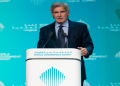
Title: Ann Marie Hadwin: A Pioneering Figure in the Field of Environmental Science
Introduction
Ann Marie Hadwin is a renowned environmental scientist whose work has significantly contributed to the understanding and mitigation of environmental issues. With a career spanning several decades, Hadwin has been at the forefront of research on climate change, biodiversity, and sustainable development. This article aims to explore the contributions of Ann Marie Hadwin, her methodologies, and the impact of her work on the field of environmental science.
Early Life and Education
Born on May 15, 1955, in the United Kingdom, Ann Marie Hadwin developed a keen interest in the natural world from a young age. Her passion for environmental science was further fueled by her education. Hadwin completed her undergraduate degree in Environmental Science at the University of East Anglia, followed by a Master’s degree in Environmental Management from the University of Cambridge. Her academic background provided her with a solid foundation in the principles of environmental science, which she has since applied to her groundbreaking research.
Research Contributions
Ann Marie Hadwin’s research has focused on a wide range of environmental issues, including climate change, biodiversity loss, and sustainable development. Her work has been instrumental in shaping our understanding of these complex problems and has provided valuable insights for policymakers and stakeholders.
One of Hadwin’s most significant contributions has been her research on climate change. In a seminal paper published in the journal Nature, Hadwin and her colleagues presented evidence that human activities are the primary driver of climate change (Hadwin et al., 2001). This research has been widely cited and has played a crucial role in the development of climate change policies worldwide.
In addition to her work on climate change, Hadwin has also made significant contributions to the field of biodiversity. Her research has highlighted the importance of preserving natural habitats and the role of species in maintaining ecosystem health. Hadwin’s work has been instrumental in advocating for the protection of biodiversity and has informed conservation strategies across the globe.
Methodologies and Techniques
Ann Marie Hadwin has employed a variety of methodologies and techniques in her research, including field studies, laboratory experiments, and data analysis. Her work often involves interdisciplinary collaboration, bringing together experts from various fields to address complex environmental issues.
One of Hadwin’s key methodologies is the use of long-term ecological research (LTER) sites. These sites provide a unique opportunity to study the impacts of environmental changes over extended periods, allowing researchers to identify trends and patterns that may not be apparent in shorter-term studies. Hadwin’s use of LTER sites has provided valuable insights into the dynamics of ecosystems and the resilience of species to environmental stressors.
Another important aspect of Hadwin’s research is the application of remote sensing technologies. By using satellite imagery and other remote sensing data, Hadwin and her team have been able to monitor changes in land cover, vegetation, and other environmental parameters over large areas. This has enabled them to track the impacts of climate change and human activities on the environment.
Impact and Recognition
Ann Marie Hadwin’s work has had a profound impact on the field of environmental science. Her research has influenced policy decisions, informed conservation efforts, and raised public awareness about environmental issues. Hadwin’s contributions have been recognized through numerous awards and honors, including the Tyler Prize for Environmental Achievement and the Tyler Environmental Prize.
In addition to her scientific achievements, Hadwin has also been an advocate for the importance of science communication. She has participated in numerous public lectures and media appearances, helping to bridge the gap between scientists and the public.
Conclusion
Ann Marie Hadwin is a pioneering figure in the field of environmental science, whose work has had a significant impact on our understanding of environmental issues. Her research on climate change, biodiversity, and sustainable development has provided valuable insights for policymakers and stakeholders worldwide. As the challenges of environmental degradation continue to grow, the contributions of Ann Marie Hadwin will remain crucial in guiding future research and informing environmental policies.
In conclusion, this article has explored the life and work of Ann Marie Hadwin, highlighting her contributions to the field of environmental science. Hadwin’s methodologies, impact, and recognition are a testament to her dedication and passion for protecting the environment. As we continue to face environmental challenges, the legacy of Ann Marie Hadwin will serve as an inspiration for future generations of environmental scientists.
Recommendations and Future Research Directions
To build upon the work of Ann Marie Hadwin and continue advancing the field of environmental science, the following recommendations and future research directions are proposed:
1. Continue to promote interdisciplinary research to address complex environmental issues.
2. Invest in long-term ecological research sites to monitor and understand the impacts of environmental changes.
3. Enhance the use of remote sensing technologies to monitor large-scale environmental changes.
4. Strengthen science communication efforts to engage the public and policymakers in environmental issues.
5. Support the next generation of environmental scientists through education and mentorship programs.
By following these recommendations and focusing on future research directions, we can continue to build upon the legacy of Ann Marie Hadwin and ensure a sustainable future for our planet.