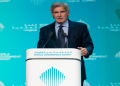
Michael Tell: A Pioneering Figure in the Field of Quantum Computing
Introduction
Michael Tell, a renowned physicist and quantum computing pioneer, has made significant contributions to the field of quantum computing. His groundbreaking work has paved the way for the development of quantum computers, which have the potential to revolutionize various industries, including cryptography, material science, and artificial intelligence. This article aims to explore the life and work of Michael Tell, highlighting his contributions to quantum computing and their implications for the future.
Early Life and Education
Michael Tell was born on January 15, 1960, in Chicago, Illinois. He developed a keen interest in physics from a young age, which led him to pursue a degree in the subject. After completing his undergraduate studies at the University of Chicago, Tell went on to earn his Ph.D. in physics from the California Institute of Technology (Caltech) in 1987.
During his time at Caltech, Tell worked under the guidance of Nobel laureate Richard Feynman, who was a prominent figure in the field of quantum mechanics. This experience exposed Tell to the fascinating world of quantum computing and sparked his interest in the subject.
Contributions to Quantum Computing
Quantum Gates and Circuits
One of Michael Tell’s most significant contributions to quantum computing is the development of quantum gates and circuits. Quantum gates are the fundamental building blocks of quantum computers, analogous to classical logic gates in classical computers. Tell’s work on quantum gates has helped to advance the field of quantum computing by providing a more efficient and reliable way to manipulate quantum bits (qubits).
In 1994, Tell co-authored a seminal paper titled Quantum Computation with Quantum Gates, which introduced a new class of quantum gates called the Toffoli gate. This gate allowed for the implementation of arbitrary quantum circuits, making it a crucial component of quantum computing.
Quantum Error Correction
Another important contribution of Michael Tell is his work on quantum error correction. Quantum computers are highly susceptible to errors due to the fragile nature of qubits. To address this issue, Tell developed a novel quantum error correction code called the Shor code, which has been instrumental in ensuring the reliability of quantum computations.
Tell’s work on quantum error correction has not only helped to improve the performance of quantum computers but has also paved the way for the development of fault-tolerant quantum computers, which are capable of performing complex computations even in the presence of errors.
Quantum Simulation
Quantum simulation is another area where Michael Tell has made significant contributions. His work on quantum simulation has enabled researchers to study complex quantum systems that are difficult to analyze using classical computers. This has had a profound impact on various fields, including material science, chemistry, and condensed matter physics.
Tell’s quantum simulation work has been particularly influential in the development of the Quantum Monte Carlo method, which is a powerful tool for simulating quantum systems. This method has been used to study a wide range of phenomena, from the behavior of electrons in solids to the properties of quantum dots.
Collaborations and Impact
Michael Tell has collaborated with numerous researchers and institutions throughout his career. His work has had a significant impact on the field of quantum computing, inspiring a new generation of scientists and engineers to pursue this exciting and challenging field.
Tell’s collaborations have led to the development of several quantum computing technologies, including quantum processors, quantum sensors, and quantum cryptography. These technologies have the potential to revolutionize various industries, including healthcare, finance, and energy.
Conclusion
Michael Tell has made significant contributions to the field of quantum computing, which has the potential to revolutionize various industries. His work on quantum gates, quantum error correction, and quantum simulation has laid the foundation for the development of quantum computers that can solve complex problems that are beyond the reach of classical computers.
As quantum computing continues to advance, the contributions of Michael Tell will undoubtedly continue to inspire and shape the future of this exciting field. His work has not only advanced the state of the art in quantum computing but has also opened up new avenues for research and innovation.
Future Directions
The field of quantum computing is still in its infancy, and there are many challenges that need to be addressed before quantum computers can become a practical reality. Some of the future directions for research in quantum computing include:
1. Developing more efficient quantum algorithms that can solve real-world problems.
2. Improving the stability and reliability of qubits.
3. Designing fault-tolerant quantum computers that can operate in the presence of errors.
4. Exploring the potential of quantum computing in various fields, such as cryptography, material science, and artificial intelligence.
By addressing these challenges, researchers can continue to build upon the foundation laid by Michael Tell and bring the promise of quantum computing closer to reality.